ITA/ENG
There is an obsession troubling the Boards of multinational beverage corporations: is Gen Z truly to blame for the global collapse in spirits volumes? The convenient answer is yes. The real one, backed by 2026 macroeconomic data and on-the-ground observation, is entirely different. The genuine crisis facing the spirits industry is not a sudden wave of generational abstinence, but a total disconnect between brand marketing strategies and actual consumer social behaviors.
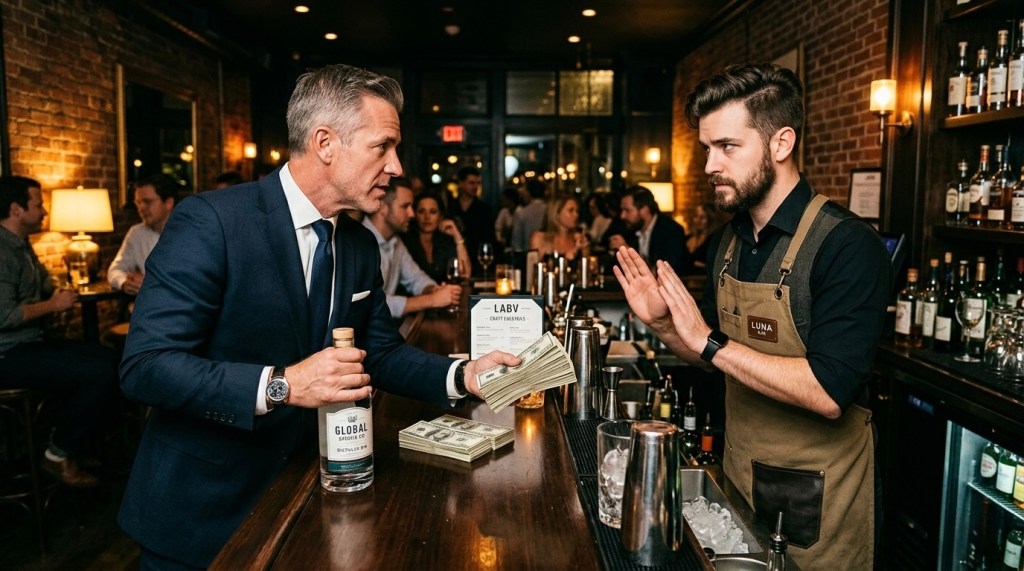
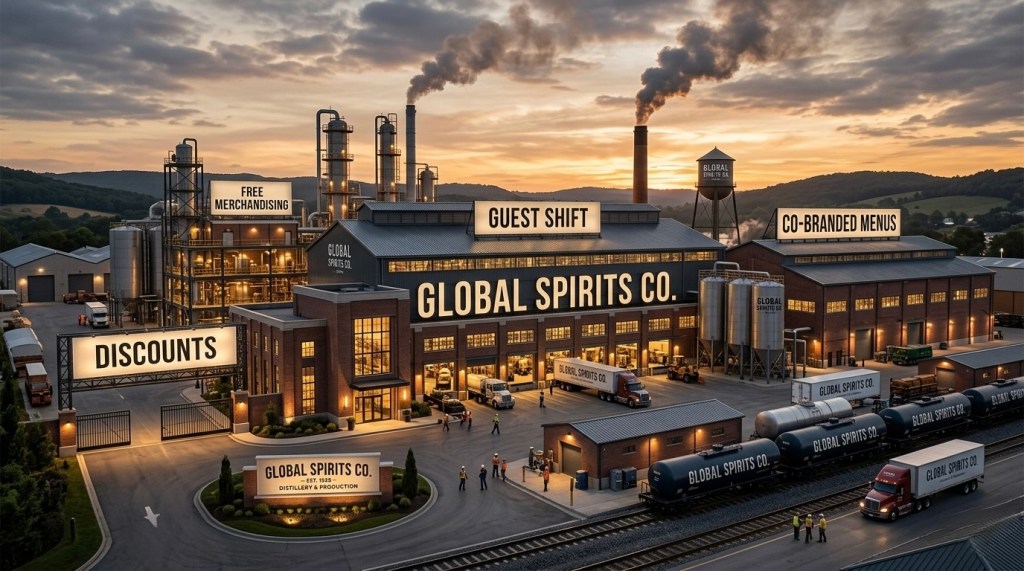
Let’s be clear. If we exclude that microscopic percentage of 5-star luxury hotels or world-ranked bars that receive direct financial retainer fees, the vast majority of multinational trade budgets on the territory are spent quite differently. We are talking about a relentless, widespread commercial push consisting of aggressive case discounts, free goods, endless streams of merchandising, co-branded menus, and budgets for events or guest shifts.
All this for a single objective: to convince the independent bar operator to list the bottle and place it on the back bar. But this budget-draining machine is running out of steam. Brands are saturating venue stockrooms, yet the end consumer is not ordering.
Protected Socializing and the Smartphone Effect
To understand this roadblock in sell-out, we must look at the sociology of the modern bar. As I previously outlined in a prior article—referencing an insightful exchange with my colleague Yuri Gelmini in Milan—the smartphone has literally “stolen” the entertainment around the table. Fluid socializing and gossip are now consumed online hours beforehand.
Compounding this is digital reputation anxiety: Gen Z has developed a rigid sense of public self-control to prevent candid snaps or stray videos from tarnishing their social media image. The result is a significant shift of actual, higher-volume alcohol consumption behind closed doors, within a safe and private domestic environment.
So, what happens when these young consumers actually step into a cocktail bar?
The Back Bar Paradox: The Real Data
Global data analyzed over the 2020–2025 period reveals a generational fragmentation that shatters legacy sales strategies built on discounts and gadgets:
- Gen Z (Ages 18–28) and Zebra Striping: Consumption participation climbed back to 70-74% in 2025, but it operates under entirely new rules. In public, Zebra Striping dominates—the systematic alternation between an alcoholic and a non-alcoholic drink on the same night—with a strong preference for high-image products or innovative Ready-To-Drink (RTD) offerings.
- Millennials (Ages 29–44) and No-Low: They represent 35% of the No-Low market, and 74% regularly practice moderation. Yet, for 57% of them, the purchasing choice is driven exclusively by the prestige of the brand.
This is where traditional strategy collapses. If a Millennial is seeking the social status of a prestigious non-alcoholic serve, and a Gen Z consumer is Zebra Striping to protect their public image, gifting yet another branded ice bucket or slashing the case price of a super-premium gin achieves absolutely nothing. If the drink list is not engineered to capture these behavioral shifts, those bottles will remain completely stagnant on the shelf.
In an era of premiumization, where total volumes decline but spend per single serve increases, value can no longer reside solely on the label. It must reside in the ritual and the strategy.
From Passive Investment to Menu Engineering
Brands no longer need to push cases through margin-eroding discounts. They need to buy strategic intelligence applied directly to the bar counter.
Outdated product masterclasses focused purely on distillation have had their day. Brands now require external consultancy capable of speaking to multinational executives while simultaneously understanding the operational reality of venues—transforming Trade Marketing budgets into genuine sales drivers through three pillars:
- Drink List Engineering: Structuring beverage programs where the brand’s product is integrated scientifically. If Gen Z seeks high-image RTDs and practices Zebra Striping, the brand must be present both in the visual alcoholic serves and in a No-Low offering that commands the same dignity and complexity as a classic.
- Visual Ritual Creation: Because consumers drink less but are willing to spend more, the serve must offer a technical and aesthetic experience (structured foams, aromatic deconstructions) that justifies the price point and incentivizes positive social sharing.
- Speed of Service Optimization: With venues structurally understaffed, the consultant must translate product usage into fluid workflows via structural recipe simplification and ergonomic station design. By eliminating superfluous steps and standardizing movements, even a downsized or younger team can execute a flawless drink in 45 seconds. This eradicates dead time and cuts food waste in full compliance with local regulations, without requiring any preventive manipulation of alcoholic products.
In 2026, a brand’s success is no longer measured by how many cases it manages to stack in a stockroom, but by its capacity to move that liquid from the back bar into the modern consumer’s glass.
I have compiled the complete macroeconomic data on generational consumer behavior (2020–2025) and the corresponding engineering solutions applied to Brands and Hôtellerie into an exclusive 3-page 2026 Report(available in ITA/ENG).
If you are a Brand Manager, an F&B Director, or an industry operator and would like an advance copy:
- Type “REPORT” in the comments below or send me a direct private message.
I will send the full Report directly to your chat in real time.
Diego Ferrari

