ITA/ENG
There is a precise moment in the lifecycle of a mass-market brand when short-term revenue charts stop being reassuring and start becoming alarming. It is the exact moment when executives realize that the race for millions of cases positioned in the price-sensitive segment of the market has yielded a dramatic side effect: the erosion of brand equity.
In industry terms, this phenomenon is known as the “Brand Trap.” When a logo is associated for decades with being cheap, accessible, and consequently “low quality” by older generations, that brand becomes culturally and commercially gridlocked.
Many Brand Managers and CEOs fall into the trap of thinking that climbing back up the ladder to position themselves as “cool” or premium is just a matter of a visual restyle, a trendy creative agency, or a high-profile influencer endorsement. It is not. The history of global marketing proves that rushing to modernize a brand’s image without a deep, structural strategy leads straight to financial disaster.
The Illusion of the Instant Facelift: The Tropicana Case Study
A historic and undeniable example of the market rejecting superficial positioning changes is the 2009 rebranding of Tropicana (then part of the PepsiCo portfolio). In an attempt to clean up the product’s image and make it look more minimal and contemporary, the company removed its iconic orange-with-a-straw imagery from the packaging. The result was catastrophic: consumers failed to recognize the product on the shelves and, paradoxically, perceived the new clean design as that of a low-end generic supermarket brand. The brand suffered a 20% drop in sales in just six weeks, translating into a net loss of $30 million before being forced to immediately reinstate the original packaging.
This highlights a fundamental truth: if you shift your aesthetics overnight to try to elevate your status, you won’t convince those who used to look down on you, and you will completely alienate your historical customer base.
The Quality Dilemma: Standardization vs. Perception
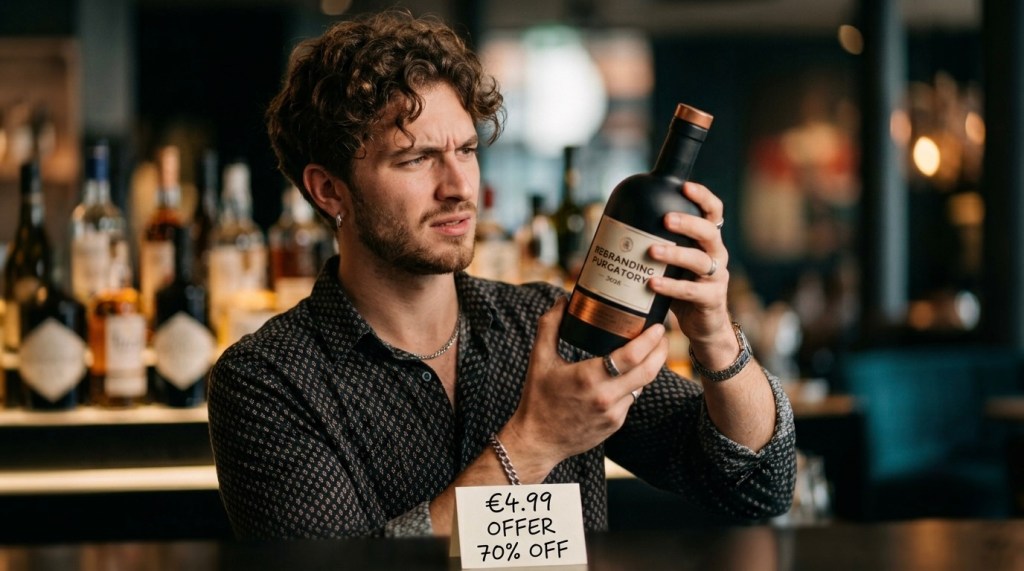
To escape the rebranding purgatory, one must dissect what the word “quality” actually means in today’s landscape. Massive confusion often arises among three distinct concepts:
- Industrial Quality (Consistency): This means possessing the technology and standardization required to ensure that the millionth bottle is chemically, organoleptically, and qualitatively identical to the very first one, flawless and unvarying over time. This is an asset that large commercial giants already possess (and which often surpasses the inconsistency of small, disorganized craft producers), yet the public frequently devalues it by labeling it as “industrial.”
- Intrinsic Quality: The actual value of the raw ingredients used and the production method itself.
- Perceived Quality (Positioning): The emotional, aesthetic, and status value that the market attributes to that specific trademark.
The real commercial paradox is that many legacy brands of spirits, wines, or soft drinks already boast excellent industrial and intrinsic quality. The issue is not the liquid inside the bottle; it is the cultural baggage of their cheap price point.
The Price Paradox: The Fear of Positioning
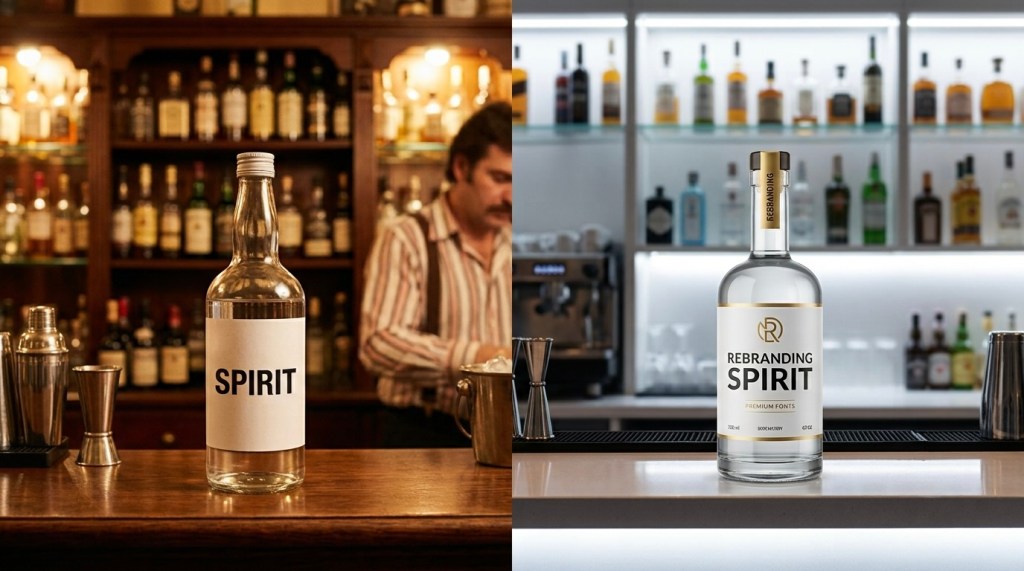
There is an additional psychological hurdle that traps brands in this purgatory: price positioning. Many legacy brands, in their attempt to modernize their image, alter the packaging and update the communication, but keep the price anchored to the low-range tier out of fear of losing historical sales volumes.
This is a lethal marketing short-circuit. In the modern beverage market, price is not merely a numerical figure; it is the primary and most powerful indicator of perceived quality for the consumer. If a brand presents itself with an avant-garde design but maintains a discount price, the public senses a core incoherence. Those looking for an affordable product will feel alienated by the new “complex” look, while the premium target and industry professionals (bartenders and distributors) will continue to snub it, reading that low price as confirmation that the liquid remains substandard. Ascending the market requires the commercial courage to lift the value bar, accepting that the price itself must act as a selective filter.
The Strategic Ascent: Leveraging Time and Generational Turnover
A brand does not transition from cheap to cool in a heartbeat. When prejudice is deeply rooted in the minds of legacy consumers, the only real resource is generational turnover, supported by highly targeted and profound portfolio adjustments.
Macroeconomic industry data indicates that premiumization today is primarily driven by younger demographics. Consumers between the ages of 18 and 34 buy less in terms of volume but demand a significantly higher perceived value for each individual purchase. This generational tabula rasa represents the real window of opportunity for a commercial brand. Gen Z and younger Millennials lack the historical memory of the old low-cost positioning; they judge the brand for what it stands for today, its current design, and its new communicative codes.
However, to avoid diluting the master brand and falling into the Tropicana trap, successful beverage giants (as seen in the long-term strategies of players like Diageo or Heineken) do not force the core product. Instead, they implement surgical interventions: calibrated Brand Extensions, limited editions, and the development of parallel lines that utilize the group’s standardized production power but enter the market with a completely independent visual identity, price point, and distribution channel.
Climbing out of the rebranding purgatory is not an aesthetic game. It is a structural chess match that requires time, a ruthless adherence to reality, and the awareness that before being considered “cool” by the new market, you must first master the heavy inheritance of your own past.
Diego Ferrari

