ITA/ENG
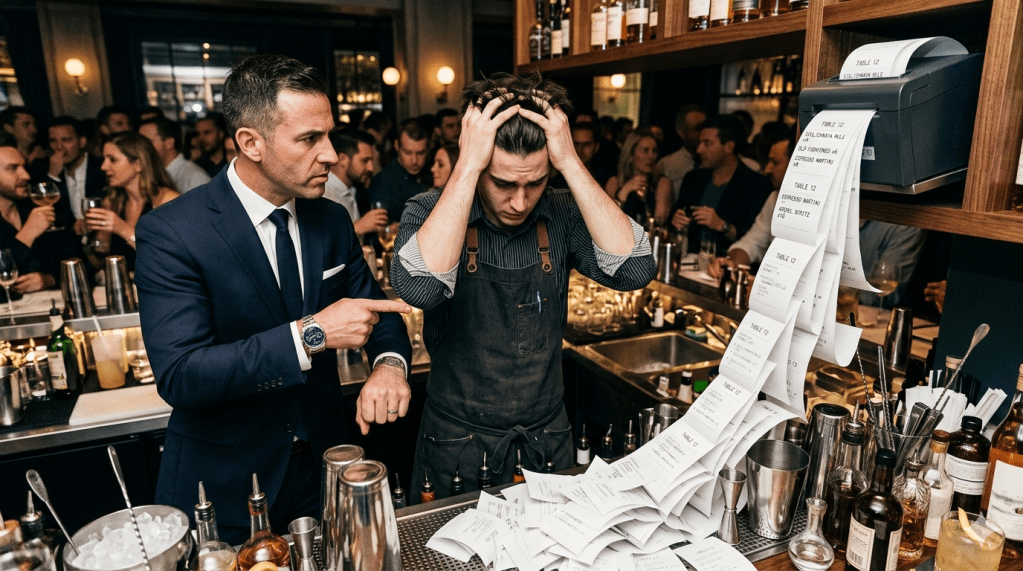
A guest choosing a high-end property seeks exclusivity, obsessive attention to detail, and time returning to be a value at their disposal. Then, they head down to the bar for an aperitif, order a signature drink or a prestigious No-Low alternative, and find themselves waiting 15 minutes before being served. At that exact moment, the perception of excellence collapses, dragging down the reputation and market positioning of the entire property.
Global hospitality data for 2026 makes it clear: while general satisfaction scores for guest rooms hold steady, the Food & Beverage division — and the bar area in particular — has become the ultimate operational and financial bottleneck for luxury hotels and luxury resorts.
Structural staff shortages are no longer a passing emergency, but a fixed variable that management must reckon with. Analyzing reputation data from Shiji Reviewpro alongside review flows on platforms like Google and TripAdvisor reveals three global pain points eroding properties’ margins and brand image:
- The Service Delays Crisis (Speed of Service): Premium-segment clients are willing to pay significant prices per single consumption, but they will not tolerate wasted time caused by poorly designed operational workflows or un-ergonomic workstations.
- The Skills Gap and High Turnover: With an industry staff turnover rate consistently sitting at 15.5% annually, bars are increasingly manned by young, seasonal, or entry-level staff. If the bar menu is old-school — relying on complex 7-to-8-step recipes that demand constant improvisation — the service line jams at the very first surge of customers during peak hours.
- Positioning for New Consumer Flows: Although Gen Z is not yet the most frequent patron at 5-star hotel bars, they represent the immediate strategic challenge. General Managers today are not just asking how to manage the classic guest, but how to build an image-driven offering (especially No-Low) capable of attracting these rising affluent generations, who seek status and inclusivity even when choosing not to consume alcohol.
The Operational Challenge: Luxury Hotel vs. Luxury Resort
While staffing bottlenecks impact the entire high-end sector, luxury resorts face significantly more complex operational challenges compared to urban luxury hotels.
Urban luxury hotels often benefit from linear, evenly distributed workflows throughout the day, relying on a more predictable business or transient clientele. Conversely, a luxury resort experiences violent, heavily concentrated peak periods within narrow windows of time: the return flow from activities or the beach, the pre-dinner aperitif hour, and late-night service.
During these stretches, pressure on the resort’s bar department multiplies exponentially. The staff must handle massive order volumes across expansive and geographically fragmented layouts within the property: simultaneously serving the pool bar, the panoramic terrace, and the indoor lounge. If the drink list has not been engineered upstream to sustain service speed with minimal teams, a collapse of the guest experience becomes a mathematical certainty. Simply increasing headcount is rarely a viable path, due to both the impact on fixed costs and the absolute lack of stable professional figures on the current market.
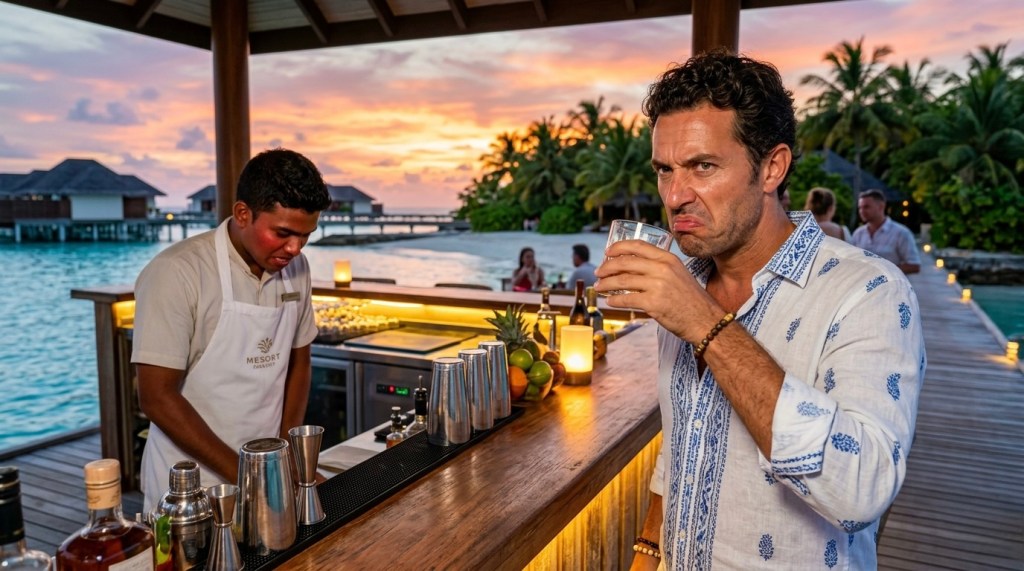
From Improvisation to Liquid Engineering
The solution forward-thinking General Managers are looking for does not lie in introducing ordering apps or QR menus that eliminate human contact — a choice that ultimately cheapens high-level hospitality and standardizes the property downward. The real answer lies in a scientific overhaul of the processes behind the counter.
I have analyzed these dynamics extensively and developed a consulting methodology focused on menu engineering and ergonomic workstation design for the hospitality industry. The goal is twofold: on one hand, to create a cross-generational drink list capable of capturing high-margin trends like prestige No-Low offerings; on the other, to simplify recipe structures and standardize bartender movements. This allows even a reduced team or young staff to serve a flawless, visually impeccable, high-perceived-value drink in exactly 45 seconds. All of this while eliminating downtime, cutting food waste, and operating in full compliance with strict local regulations without any advance tampering of alcoholic products.
I have packed these operational countermeasures for resorts into a 3-page excerpt of my 2026 Report (available in ITA/ENG) tailored specifically for corporate decision-makers.
Here is a preview of the solutions you will find inside the PDF:
- The 45-Second Rule: How to map movements behind the bar and reduce signature drink building steps without touching glassware aesthetics.
- No-Low High Margin Blueprints: The framework to engineer premium non-alcoholic options that generate the same average check as classics while slashing food costs.
- Streamlined Cross-Training: How to make menu cocktails executable with total quality consistency, even by supporting floor staff during a resort’s operational peaks.
If you are a General Manager or an F&B Director looking to receive this excerpt to understand how to optimize your bar’s margins:
👉 Write “REPORT” in the comments below or send me a private message.
I will send the complete Report directly to your chat in real time.
Diego Ferrari

