ITA/ENG
How many of you consider yourselves Social Media experts? Personally, I don’t claim to be part of the industry’s gotha, but in my own way, I’ve always strived to understand them. I’ve studied their dynamics, applied their logic, and deepened my expertise to the point of completing a Social Media Management certification.
Since the birth of Facebook—the forefather of this era—I have applied my knowledge to understand its mechanics and leverage its potential. Even back then, I sensed it was an extraordinary tool, especially because it was free. It might seem like a dated example, but the Facebook group “Cocktail Art”—which I founded and now manage alongside Shane Eaton—remains one of the largest photographic databases dedicated to cocktails on the platform, boasting approximately 34,000 images.
The arrival and evolution of Instagram, TikTok, and YouTube further captured my attention, leading me to use them for the most logical goal: enhancing my image, popularity, and the promotion of both my personal brand and my current consulting firm. Today’s younger generations are perfectly at home with these apps; they grew up with them, use them around the clock, and possess a natural knack for exploiting every new update to create viral content.
A Double-Edged Sword
What level of “free” popularity can these channels offer us, and how should we harness it? While many aim to become content creators or millionaire influencers, I believe social media is a double-edged sword. The “free” aspect ends the moment you face the—rightful—need to hire a Social Media Manager or an agency. This isn’t just an expense; it’s a business strategy:
- When used well: They enhance personal branding, corporate image, communication, and, consequently, sales and revenue.
- When used poorly: They can damage your reputation and, in the worst-case scenarios, lead to significant financial losses.
Hospitality and the “Good Enough” Fallacy
As a consultant in the hospitality world, I’ve noticed that too many bars and restaurants underestimate this reality. They fail to see that social networks are a modern commercial blueprint; neglecting them means losing substantial market share.
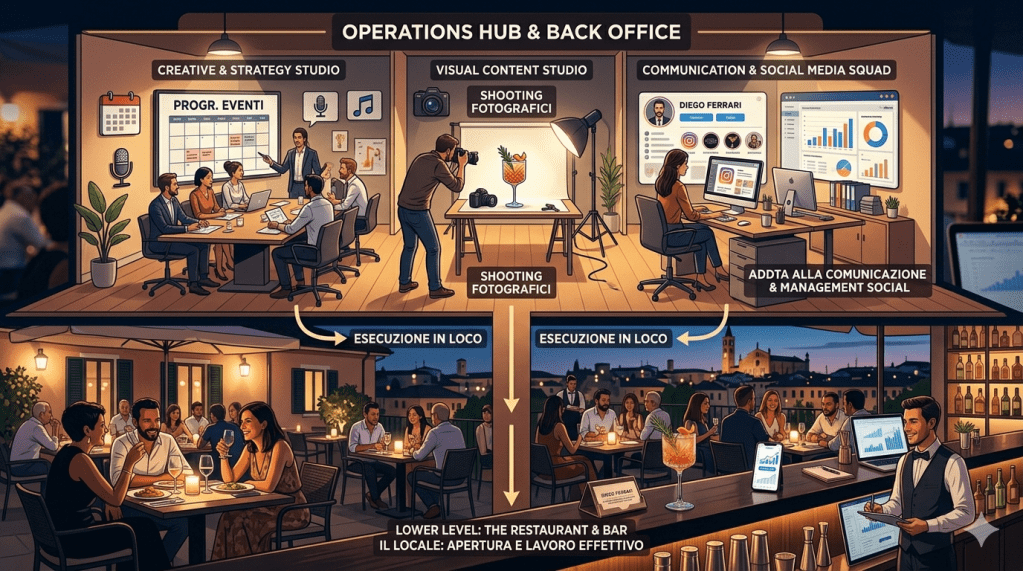
In recent discussions, I’ve reiterated a simple concept: a bar or a restaurant is a business like any other. Once upon a time, it was enough to open your doors, offer a decent menu, and rely on word-of-mouth. That is no longer enough. To survive, a venue doesn’t just need a location and staff; it needs an “office”—someone to handle communication and event programming. This back-office work has one vital goal: ensuring that all the effort put in behind closed doors results in a full house.
I understand that the necessary budgets can be intimidating, but these are investments that drastically reduce the risk of failure.
Be Present or Be Forgotten
How often do you see profiles of venues with static feeds, no stories, or low-quality photos and videos? In a world saturated with information, where the average user scrolls through two pages per second, if you aren’t constantly present, people simply forget you exist.
Often, when deciding where to go for dinner, only the usual two or three places come to mind. Then, perhaps while passing a different spot, you think: “Oh, right! Why didn’t I think of coming here?”. This happens because we are overwhelmed by stimuli: if a brand doesn’t keep up, it vanishes from the consumer’s memory.
And what about DMs? Many users write privately for info or reservations and never receive a reply. This happens because the owner doesn’t view social media as a 360-degree job that requires consistency: replying to comments, managing feedback or criticism, and investing in professional photoshoots for drinks, dishes, and staff. This is a full-time job, which is why it’s crucial to rely on professionals.
A Final Thought
I’ll leave you with a comparison: when you go out on a first date, would you show up with messy hair, shabby clothes, a dirty car, and stay silent the whole time? Of course not. You try to look your best, telling your story to attract the other person and project an image that is pleasant, clean, and trustworthy.
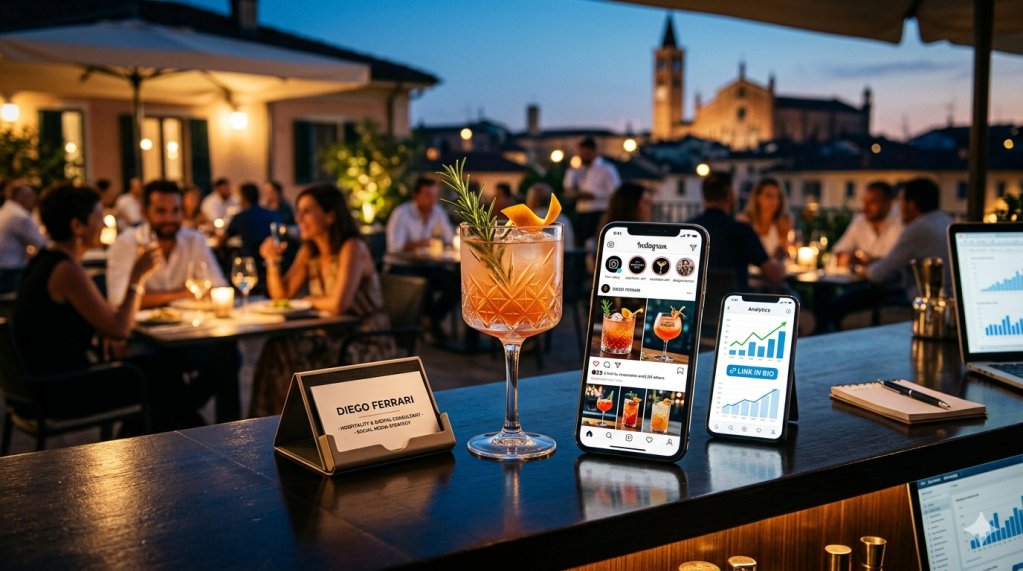
Social media does exactly the same thing: it is your business card. Don’t leave it crumpled on the table.
Diego Ferrari

