Image credit: AI-generated concepts
ITA/ENG
In today’s economic landscape, the tourism, culture, and hospitality sectors are undergoing a quiet yet radical transformation. Driving this change is not merely technological innovation, but a distinct demographic and behavioral shift: female consumers have become the primary engine behind travel experiences and modern hospitality.
Aggregated global industry data outlines an unmistakable reality. Around 80% of all travel purchasing decisions—from selecting destinations to booking hotels, itineraries, and restaurants—are guided or directly influenced by women. In the solo travel segment, 64% of global solo travelers are female, while in group travel focused on leisure, wellness, and cultural exploration, women represent roughly 75% of participants.
A Curious, Dynamic, and Experience-Oriented Audience
What sets the female audience apart is not just sheer volume, but their approach to consumption. Women demonstrate a strong inclination toward discovery and personal enrichment:
- Cultural Engagement: Women account for 58% to 62% of visitors to museums, art exhibitions, and heritage sites, favoring slow travel and local cultural appreciation.
- The Evolution of Dining: Across casual and fine dining, female guests represent over 55% of lunch and aperitivo patrons, driving demand for innovative culinary trends and sustainable menus.
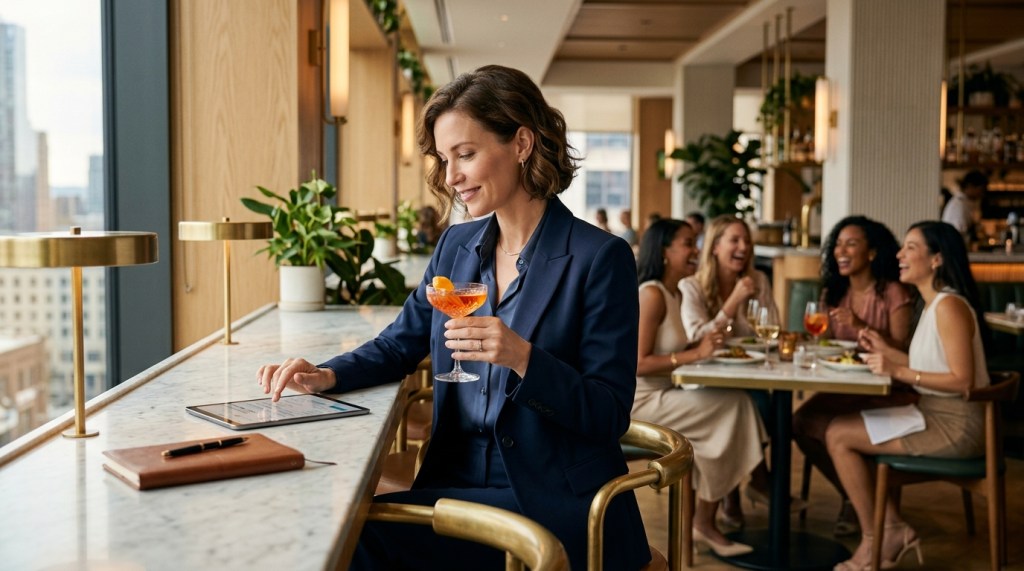
- New Beverage Trends: In cocktail bars and lounge venues, women lead early-evening attendance and serve as the primary growth driver for the No-Low ABV market, favoring tailored mixology and refined aesthetic presentation.
The Digital Amplifier: How Women Drive Social Media Visibility
The impact of female guests extends far beyond the physical boundaries of a venue or hotel, carrying immense weight in the digital space. Today, a hospitality brand’s reputation and reach are largely decided on platforms like Instagram, TikTok, and Pinterest—where women serve as the ultimate engine for virality.
Over 70% of user-generated content (UGC) related to travel, gastronomy, and mixology is created by women. This is more than simple photo-sharing; it represents a powerful digital word-of-mouth. Female users generate 30% higher engagement rates than average and are the primary users of post-saving and sharing features.
When a guest shares the visual presentation of a dish, a thoughtfully crafted No-Low cocktail, or the ambiance of a space, she effectively validates the venue’s quality to a highly receptive audience. For any business, providing a detail-oriented, photo-worthy experience is not about chasing superficial trends—it is about equipping female guests with the canvas to become the venue’s primary brand ambassadors.
Beyond Stereotypes: Designing Inclusive and Comfortable Spaces
An often-overlooked aspect of traditional venue management is the architectural and design response to the specific needs of female clientele. The preference for a particular venue or hotel relies not solely on the food menu or drink list, but on the overall perception of comfort, safety, and inclusivity.
Well-lit environments, carefully engineered acoustics that allow conversation without straining, spacious and impeccably maintained restrooms, and seating layouts that offer privacy without isolation are critical operational choices. When a space is designed with true attention to physical and psychological well-being—moving past maximum capacity per square meter—it naturally becomes the preferred choice for female group gatherings, solo travelers, and professionals. Thoughtful space design ceases to be a mere aesthetic choice and transforms into a deliberate strategy for long-term customer loyalty.
A Strategic Asset for Business Growth
In a hyper-competitive market, ignoring these shifts means missing out on the sector’s primary growth driver. For operators managing hotels, restaurants, museums, or cocktail bars, understanding and catering to female consumers is a core business necessity.
Aligning consumption patterns with operational strategies reveals clear growth levers:

Celebrating Centrality to Build the Future
Women are not merely a market demographic: they are active, independent consumers with immense power to shape trends through word-of-mouth and shared experiences. Their natural affinity for quality, social connection, and well-being is setting new benchmarks across the entire hospitality industry.
Designing the future of a hospitality business without placing the preferences, needs, and habits of female guests at the center means planning for the past. Conversely, reading these numbers accurately and translating them into intentional hospitality strategies is the key to securing long-term financial sustainability, strong brand reputation, and lasting success.
Diego Ferrari

