ITA/ENG
A few weeks ago, we touched on what I believe is a crucial signal for the bar world: the fact that venues located in smaller towns and cities across Central Europe, Eastern Europe, and the Balkans—destinations often less mainstream and off the beaten path of mass tourism—are gaining increasingly solid recognition in international rankings. This movement finally offers a beam of hope and grants well-deserved visibility to those who work tirelessly every day to prove that excellence isn’t exclusive to major metropolises.
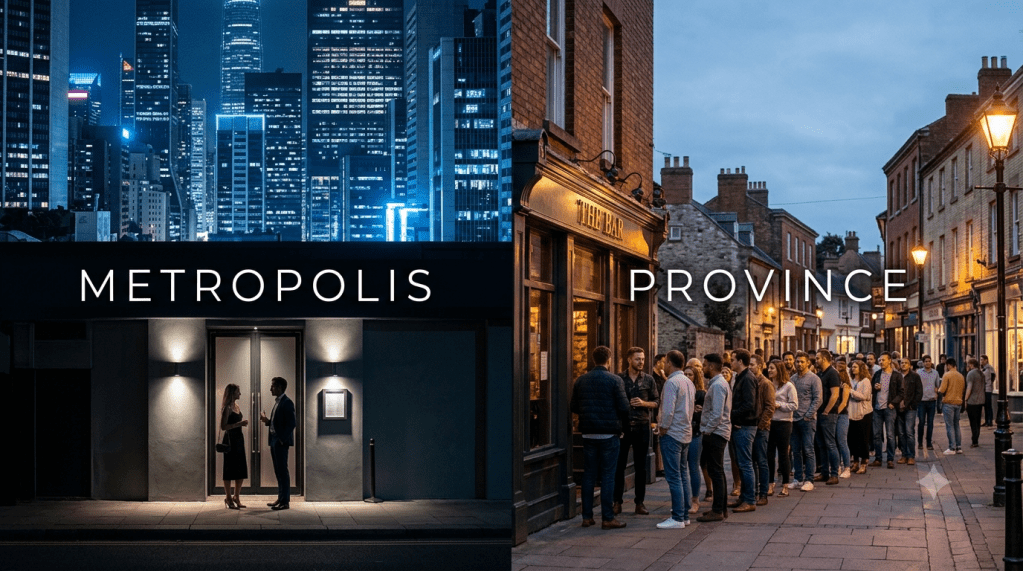
These dynamics play out all over the world. The stark dominance of major capitals ensures that tourism, financial resources, investments, and media attention stay heavily concentrated in these key hubs. Unfortunately, the risk is that a veil gets drawn over the monumental efforts of countless colleagues operating in smaller cities or, more specifically, in provincial regions.
Yet, when all is said and done, these local establishments are the true economic powerhouse driving the entire industry. And I say this from direct experience: the real numbers are built in the provinces.
If we look at a concrete analysis of spirits and liqueur consumption nationwide, we see a clear divide between major cities and provincial areas. While big cities serve as the ideal “showcase”—the places where brand image is built, high-end trends are launched, and cutting-edge cocktail culture thrives—it is the dense network of local towns and provinces that drives sales volume and ensures the financial sustainability of the entire supply and distribution chain.
In Italy, category-wise, amari, traditional liqueurs, and digestifs alone account for over 50% of the total spirits market. The vast majority of these volumes aren’t generated in high-end speakeasies in Milan or Rome, but across the more than 130,000 neighborhood bars and traditional restaurants spread throughout the Italian provinces. In major cities, consumption leans heavily toward cocktail mixing and is often concentrated around weekends or specific social occasions. In the provinces, however, the local bar remains a daily social staple. Foot traffic is exceptionally high, and key moments—like the local square aperitivo and the classic post-meal digestif at traditional trattorias—generate a steady, high-volume flow of opened bottles that major cities simply cannot match in quantity.
And this is precisely where a massive paradox emerges. The common perception—which reflects a harsh reality—is that brands and beverage companies divide their resources strictly: “Tier A” investments reserved for major metropolises, drastically reduced budgets for “Tier B” cities, and little more than breadcrumbs for the rest of the provinces.
It’s far too easy to forget that while big cities build brand equity and high-profile visibility, it’s the provinces that deliver the actual sales volumes and liquidity essential for the industry’s survival.
Behind these numbers are humble, incredible bars and cocktail venues grinding relentlessly. They are fully aware of the logistical and media challenges of their territory, yet driven by the passion and hope of reaching the level of their international idols. All too often, though, these efforts feel like a one-way street.
Just last night, I was speaking with a friend and colleague from Sicily—a professional who organizes a major annual event in his city at the venue where he works. Talking about life and work, he shared the frustration and immense effort he pours in every single day, year after year, hoping simply to place his venue on par with top-tier national and international bars and bartenders. Like him, I think of a thousand other dedicated professionals and friends I’ve had the privilege of meeting while traveling across Italy and the world—people who left me speechless with their deep passion and the outstanding quality of work they achieve in their respective local scenes.
Addressing this topic is deeply personal to me. I also come from a small provincial town and know the uphill battle all too well. At the same time, I consider myself fortunate because I made strategic career choices, following a path that earned me awards and recognition early on—back in a time before social networks even existed. In those days, everything was built strictly through solid public relations, ground work, and significant personal investment.
Reflecting on that journey, I’d like to share a few humble pieces of advice that I hope will help you in your daily path:
- Have a clear strategy: Leave nothing to chance; define your short- and long-term goals.
- Show up at industry events: Attend trade fairs, masterclasses, and industry gatherings. Introduce yourself, make connections, and pay close attention to top industry leaders—learn who they are, their stories, and what they actually do.
- Invest in international experience: If you have the opportunity, gain experience working abroad to understand the dynamics and mindset of international hospitality firsthand.
- Test yourself in competitions: Enter cocktail competitions; they are an essential training ground for personal growth and industry exposure.
- Cultivate media relationships: Build genuine, mutual relationships with industry journalists and actively participate in their initiatives.
- Use social media with purpose: Make digital channels work to your advantage. Follow people who serve as genuine professional and personal role models—not just someone pulling millions of TikTok views by pouring twelve ingredients into a glass while dressed as Goku.
- Travel and build PR: When you travel, visit renowned bars, talk to the teams behind the counter, and stay in touch. Public relations are a fundamental pillar of this business.
- Stay humble: Always strive to improve without ever feeling superior or putting down colleagues and brands.
- Value the supply chain: Build strong, authentic relationships with your suppliers, local distributors, and brand ambassadors. They are the first to open doors for events, collaborations, and guest shifts.
- Be the entrepreneur of your own brand: Invest in your education and take ownership of your personal brand—whether that’s your name or the identity of your bar.
Stay humble and persistent… and you’ll see that the results, the recognition, and the rankings will follow—province or not.
Now, I’d love to hear from you: tell me about your local venues, your projects, your challenges, and your daily efforts. It will be an honor to read your stories.
Diego Ferrari

