ITA/ENG
In an era dominated by digitalization and the increasing presence of AI in both our professional and private lives, a deep analysis of service excellence—starting from the human touch—is both timely and necessary.
While speaking with my dear friend Cassandra Eichhoff, this crucial perspective was brought to my attention, and I promised to analyze it thoroughly and provide an in-depth exploration.
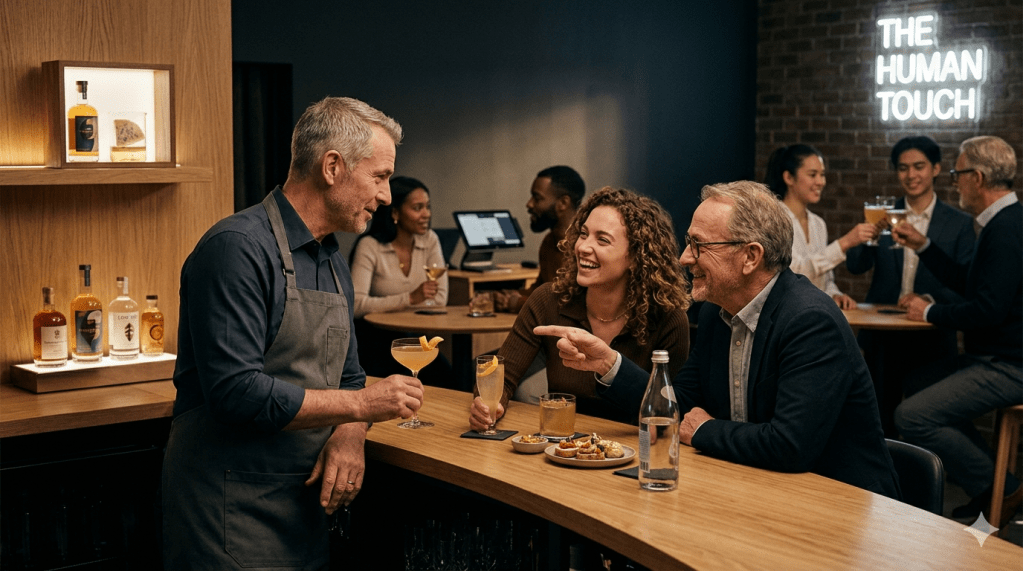
What I want to emphasize in this article, while raising awareness within the hospitality world, is that this is not about returning to the past, but about humanizing the future. In a world where technology manages reservations and often orders, service excellence is no longer just about “delivering a drink,” but about managing the energy of the moment. My client is right: after years of wild digitalization, the public is hungry for real connection.
Generational Empathy
The modern waiter or bartender must be a “chameleon.” They must know how to serve the Boomer seeking classicism in fine dining, as well as the Gen Z guest looking for sustainability, transparency, and complex non-alcoholic drinks. Excellence means understanding who is in front of you in 10 seconds. It often happens that industry operators, despite having essential technical skills, lack the experience or intuition required to adapt immediately to the guest.
Knowledge-Based Service
Excellence today is driven by competence. If a guest asks about a No-Alcohol Pairing, the staff shouldn’t just say “it’s good,” but should be able to explain the tannic profile or the acidity. Knowledge generates perceived value (and justifies the price). Essential training through specialized schools, workshops, and masterclasses builds the expertise of our team, giving them the tools to
answer any question or curiosity the guest may have.
Creative Problem Solving
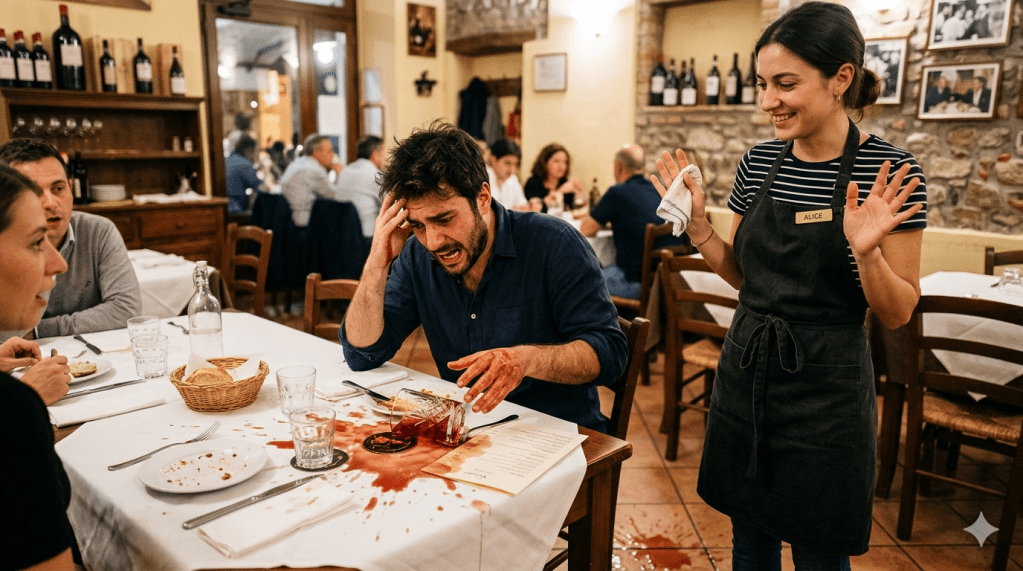
With rising costs, global crises, and economic uncertainty, guests have become more demanding. Modern excellence consists of transforming a hitch (a delayed table, a drink that wasn’t enjoyed) into an opportunity for storytelling and extra attention. A well-known story involves one of the world’s most famous luxury hotel brands which, after careful analysis, realized that problem-solving needed to be immediate. They decided to grant a $2,000 monthly budget to every employee to satisfy needs and resolve guest issues on the spot. This empowered the team and transformed this policy into unparalleled marketing and publicity.
Technology vs. The Human Touch
- The Error: Using tablets to eliminate human contact. Often in restaurants or cocktail bars, technology has made the guest-operator relationship “colder.” I love it when a waiter or bartender tells the story of the menu or puts emphasis on describing a dish or a drink, moving away from a “scripted” rehearsal at the table.
- The Excellence: Using data to know that a specific guest loves salmon and Low ABV drinks, greeting them by name and anticipating their desires. AI performs the analysis; the human provides the welcome. Many establishments, especially major hotel chains, use technology to remember who you are, what you drank, what you ate, and your average spend. While this analysis might seem “Big Brother” style, it allows the company to understand the guest and offer the best service every time without being intrusive.
Inclusivity and Accessibility (“Afford something nice”)
This is a key point for our clientele. Excellence must not be arrogant. Modern luxury is democratic: it means providing 5-star service even to those who only order a non-alcoholic drink and a small appetizer. Regarding the art of welcoming, look to the Japanese: they are the masters in this field.
Making the experience “special” for someone making a financial sacrifice to “afford themselves something nice” creates eternal brand loyalty—whether it’s a bar, a restaurant, or a hotel—regardless of the final bill.
Final Analysis: Hospitality as the Last Frontier of Authenticity
In a market saturated with algorithms and automated processes, excellence in customer service is no longer a luxury “optional,” but the only true non-replicable competitive advantage. Current flow analysis tells us that the 2026 consumer is not just looking for a flawless product, but for emotional validation. When a guest decides to “treat themselves,” they are investing their time and resources to feel understood, not just served.
The real challenge for the hospitality industry today is twofold:
- Emotional Intelligence Training: It is no longer enough to teach how to serve wine or mix a drink; we must train staff in “reading the soul” of the person sitting at the bar.
- The Value of the Invisible Detail: Excellence manifests in what the guest does not ask for, but that we have already anticipated. It is the transition from Service (technical execution) to Hospitality (caring for the person).
In conclusion, investing in Excellence means protecting brand value. A technical error can be forgiven; indifference in service marks the end of the relationship with the guest. The future belongs to those who know how to use technology to manage data while leaving the most sacred task to the human being: the art of hospitality.
Salute
 Diego Ferrari