ITA|ENG
Known by many but visited by few, Belgrade is one of the most fascinating cities in the Balkans. As the capital of Serbia, it is considered one of the oldest cities in Europe and a strategic crossroads where Roman, Byzantine, and Serbo-Austrian cultures have intertwined.
My connection to this stunning capital dates back many years when, in search of adventure and behind the wheel of our car, my wife and I would traverse Eastern Europe and the Balkans every August to visit her family in Romania. In those days, smartphones didn’t exist, and initially, neither did GPS navigators with European maps. Everything was done the “old-fashioned way”: a paper map, a few directions shared with my brother-in-law, and road options that, at the time, certainly didn’t minimize travel duration.
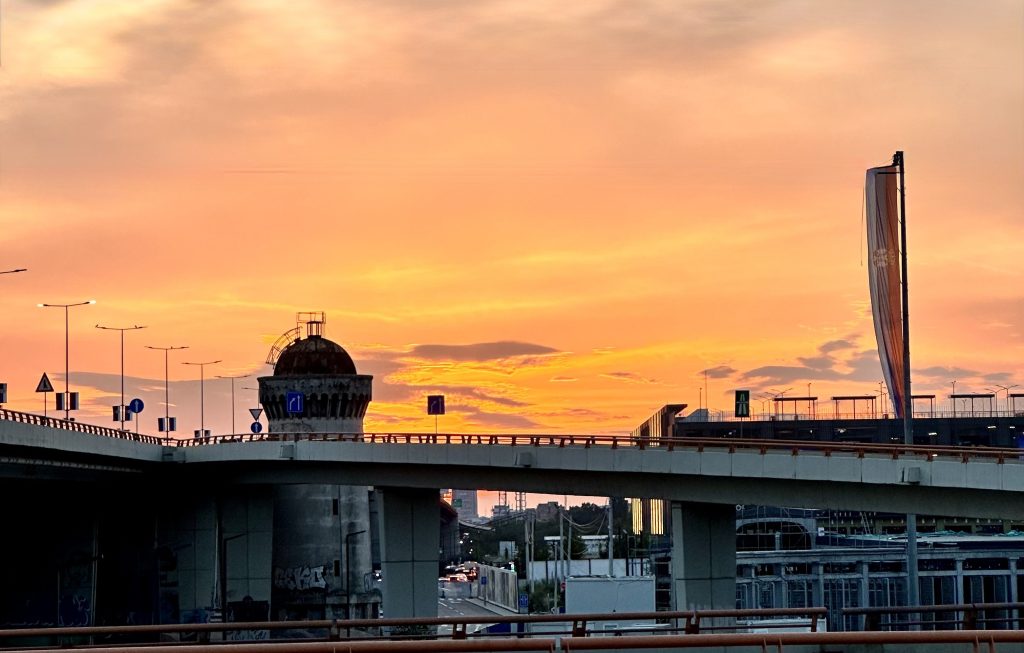
We always calculated our timing carefully to avoid arriving in Belgrade during peak traffic hours, especially since the main road crossed the Gazela Bridge, which even today sees a flow of about 180,000 cars a day. One of the best parts of the trip was reaching Belgrade before 4:00 PM to watch the sunset over the Danube, passing by the Genex Tower—an imposing, abandoned brutalist building, seen almost as a gateway to the city; at its top stood a now-defunct revolving restaurant. Rumor has it that it will soon be renovated to house a hotel and luxury apartments.
A City in Evolution
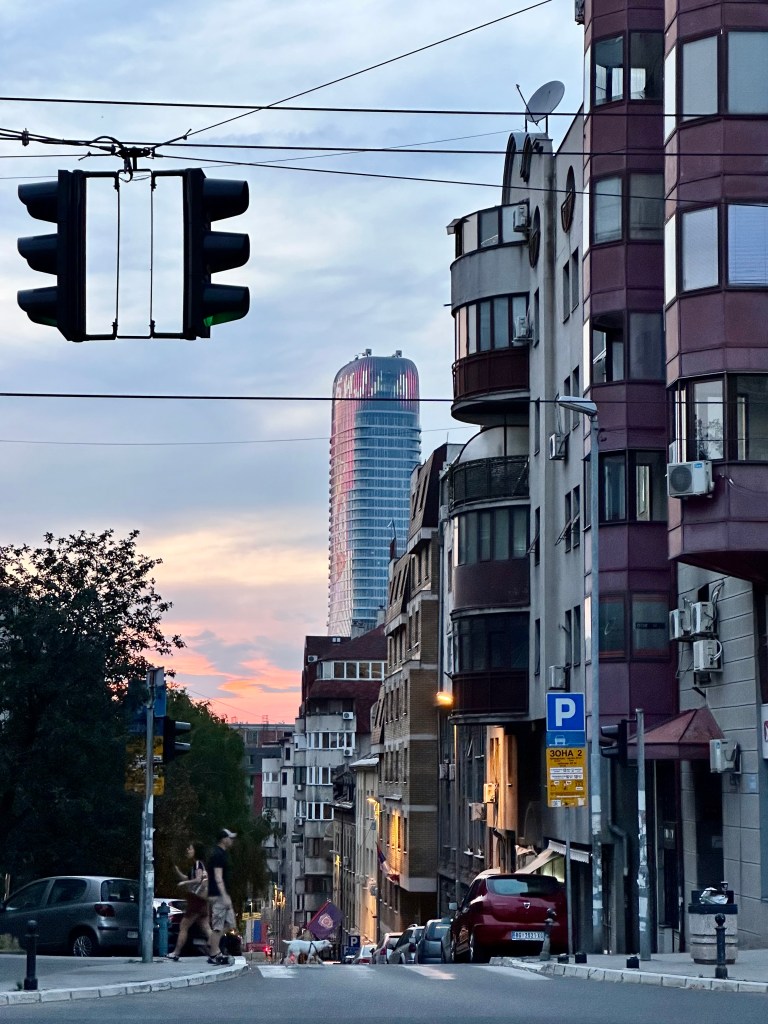
Shortly after, we would reach the famous bridge that offered a glimpse of the city and its hills. Not many know that Belgrade is built on several hills; those who know me are aware of my love-hate relationship with cities full of steep climbs and descents, but not here… here, I adore every corner, palace, and hidden alley.
Back then—we’re talking about the early 2000s—the city still appeared scarred by conflict, even though the war had ended long before. I remember a building on the river that still bore artillery marks, the riverboats, the fortress in the distance to my left, and a city that was gradually evolving. My wife and I would always say the same thing every time we passed through: “One day, I want to stop and visit this city because I believe it is beautiful.”
A few years later, my wish became reality. I believe it was 2023 when I made the first of many visits to Belgrade. Invited by Vladimir Simić—who would later become a great friend and a respected colleague—I arrived with great enthusiasm, eager to finally explore one of the cities that fascinated me most. Just by passing the Genex Tower, not only in 2023 but every year since, I realized how much the city was changing, evolving, and growing.
Crossing the bridge, I immediately noticed a Belgrade that shouts to Europe: “I am here, and I am second to no other European city.” I smiled to myself as Vladimir proudly shared every detail, like someone welcoming a stranger into his home—perhaps unaware that this city would very soon become a benchmark for the bar scene in the Balkans, boasting a very exciting culinary landscape.
Practical Tips and Must-See Spots
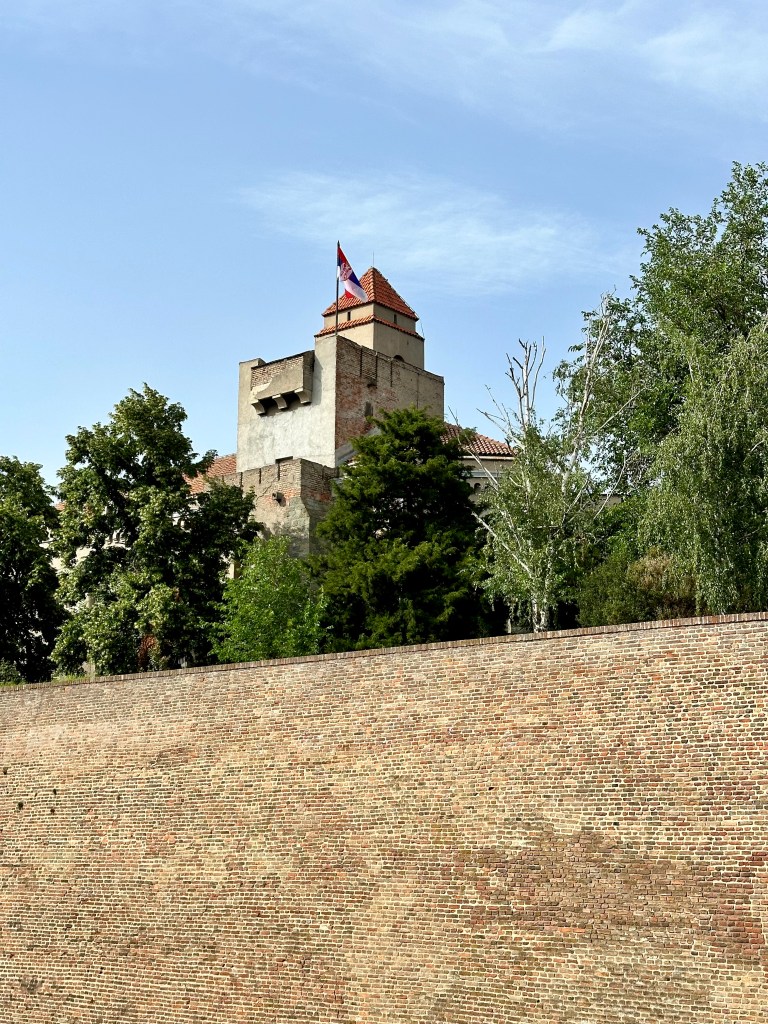
If my story has piqued your curiosity and you wish to visit, know that although prices have risen over the years, Belgrade still offers an excellent price-quality ratio and is not expensive at all. For those living in Northern Italy, there are direct flights from Bergamo, and in just over an hour and a half, you are in Serbia. A taxi will get you to the Old Town near the Fortress in about 30-40 minutes (traffic permitting), which is an absolute must-visit. The fortress offers views of the western part of the city and the entire river; inside, a massive green area provides a peaceful walk surrounded by nature.
Along the riverfront, the city reveals different faces:
- The Docks: Repurposed warehouses that now house restaurants and clubs, reclaiming a neighborhood that has become an artistic hub over the years.
- Novi Beograd (New Belgrade): The futuristic, trendy side of the city, full of skyscrapers and multinational headquarters. Here, apartment prices can exceed those of many European capitals, but trust me, it is beautiful.
- To the South: The west bank still features old-school Brutalist neighborhoods, while the east bank is lined with beautiful houseboats anchored to the shore.
In the city center, you can wander through the “Old” zone with its massive pedestrian boulevards, stunning squares with imposing statues, and buildings with handcrafted facades. Be sure to visit the Temple of Saint Sava, one of the largest Orthodox churches in the world—it is breathtaking. Visit Republic Square, stroll down Kneza Mihaila (the main pedestrian shopping street), and stop by the Nikola Tesla Museum, dedicated to the world-renowned scientist of Serbian origin.
Where to stay? I have stayed in several hotels, but the absolute best in my experience were the Crowne Plaza Belgrade (IHG) and the Hilton.
The Bar and Restaurant Scene
Belgrade has become a reference point for the cocktail world in just a few years. Thanks to Vladimir Simić—the “father” of many generations of Serbian bartenders who trains and creates opportunities through his school Bartenders 710—I have discovered incredible spots with high-level mixology. Every year, Vladimir and his team organize events like the Belgrade Cocktail Fest or the more recent Bartender’s Circle, involving local and international bars, brands, and bartenders.
Here are some notable bars:
- Belgrade Cocktail Club: A small, intimate bar dedicated to classic cocktails and true bar culture. It feels like entering a private sanctuary.
- Q Bar: A creative space with soft lighting, built around seasonal ingredients and homemade cordials.
- Lenja Buba: A cozy spot with a strong focus on classics and an extraordinary selection of spirits.
- Isabel Speakeasy: Elegant and high-energy with a strong late-night pulse.
- Riddle Bar: A playful concept where cocktails have character and an element of surprise.
- Holy Moly Cocktail Club: Modern and dynamic, combining creative mixology with a vibrant social scene.
- Old Pal: An American-style cocktail bar rooted in classic mixology and “spirit-forward” drinks.
- Kultura Bar: One of the city’s most historic bars, known for its relaxed atmosphere and distinctive design.
- YAMA: A Sake Bar with an incredible selection, featuring a New York-style vibe. The owner brings years of expertise from the States.
- Dragoljub New Balkan Cuisine: A restaurant and cocktail bar where traditional Balkan ingredients are reimagined in a modern way.
- Restoran Lovac (The Hunter): A true Belgrade institution with a rustic hunting-lodge interior and authentic national dishes.
- Restoran Cveće Zla (The Flowers of Evil): Bold, elegant, and urban, offering modern cuisine for a cosmopolitan crowd.
- Faro: A contemporary fine-dining restaurant focused on precision, seasonality, and refined gastronomic expression.
For Aged Spirits and Cigars:
- La Libertador
- Whiskey Bar
- Cohiba Atmosphere
The list could go on forever, including new spots like Noble Roots, the Elizabeth Bar inside the new Hotel Bristol, Josephine, or the cocktail bar at the Nine Hotel.
In conclusion, every time a trip ends, I already find myself thinking about when I can return. Over time, many Serbian friends and colleagues have welcomed me with open arms, always ready for a chat, a drink, or a motorcycle tour of the city with my friend Nikola Vlahović.
What are you waiting for?
Salute!
 Diego Ferrari