Shanghai: First Impressions of Mainland China
Our first time in Mainland China was an experience filled with great expectations and a vivid desire to explore and learn. Our initial stop was the major city of Shanghai.
Arrival and Initial Sightings
The journey began with a direct flight of approximately 11 hours from Milan, aboard a new-generation aircraft of China Eastern Airlines, which provided impeccable service and comfort. Upon landing at Shanghai-Pudong International Airport (PVG), we were transferred to the city in a luxurious, technologically advanced minivan, complete with courtesy water and touch-screen displays.
During the ride, our attention was immediately drawn to the countless Chinese electric cars with their futuristic designs. Our companion, Sean, explained that these vehicles are distinguished by their green license plates, in contrast to the blue ones reserved for gasoline cars. The surrounding area, extending for miles into the suburbs, presented a fascinating contrast: stretches of green, cultivated fields alternating with districts of towering skyscrapers, a testament to the region’s immense population density.
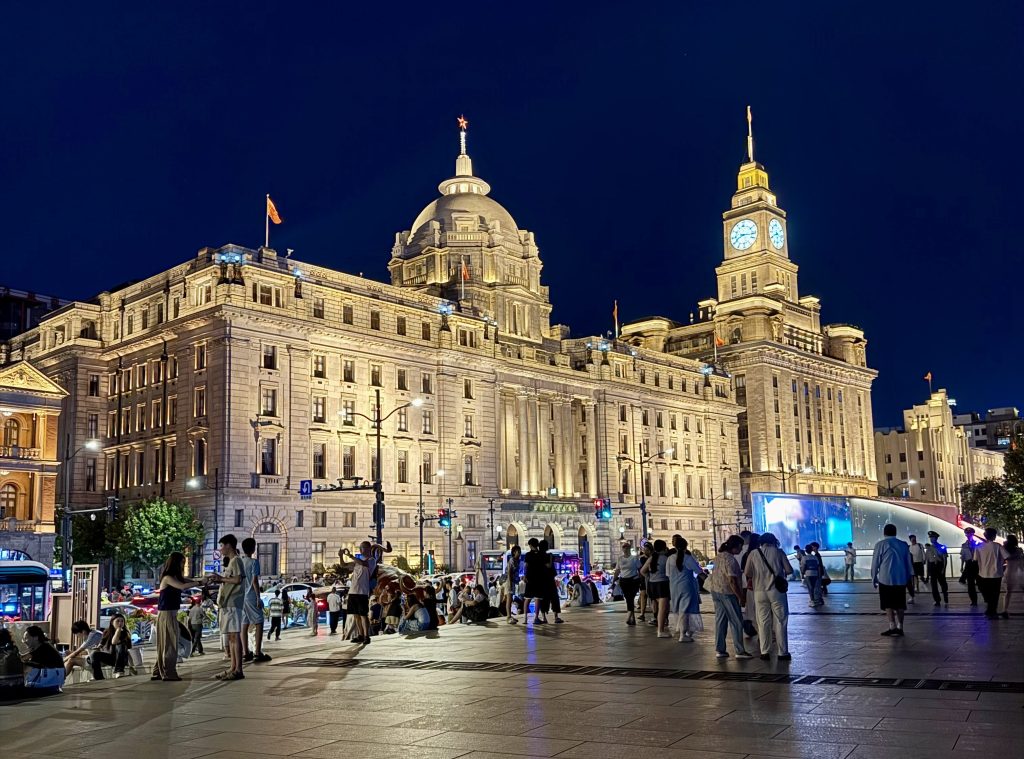
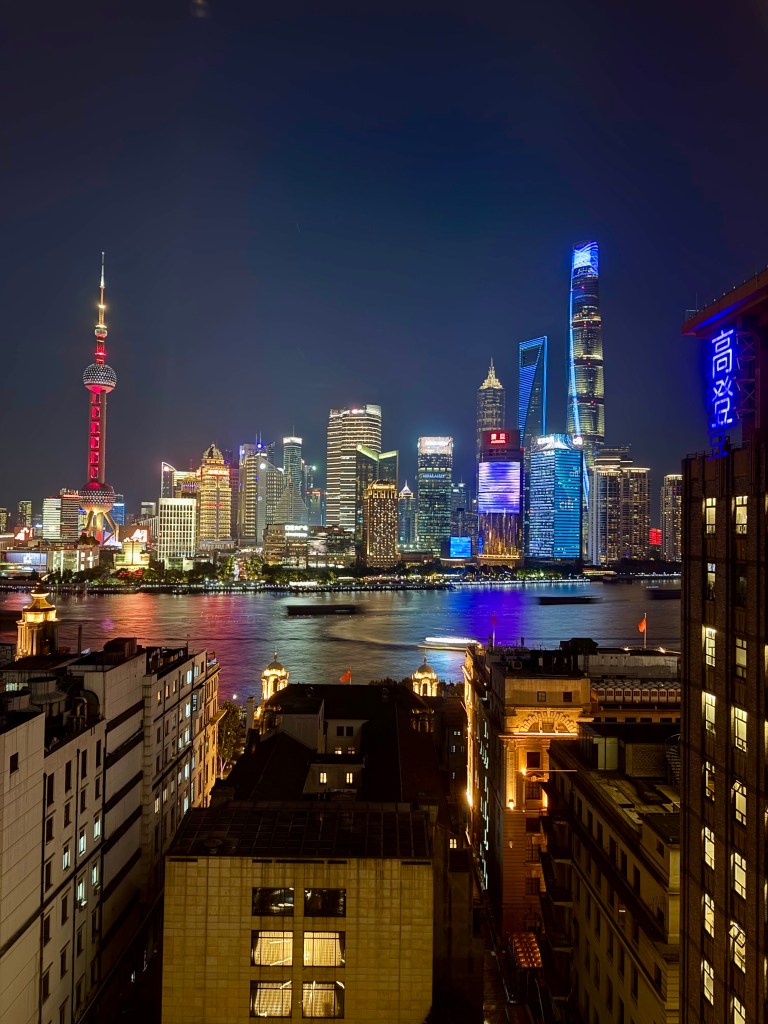
Due to the heavy traffic, it took us about an hour and a half to reach our hotel, the Waldorf Astoria at the Bund. As the name suggests, it holds a strategic position on the left side of the Bund, overlooking the city’s famous skyline and framed by splendid colonial buildings.
Luxury and Life on the Bund
Our arrival at the hotel was marked by a wonderful welcome from the Long Bar staff, who escorted us to our room: a dream of luxury and comfort with a breathtaking view of the Bund’s waterfront promenade. We barely had time to sip the drink offered by the bartender, prepared right in our room, before it was time to head out.
The hot and humid climate in August called for light clothing and plenty of water. We made our way to the waterfront—which is, in fact, a riverbank—where we encountered an unimaginable crowd. Thousands of people were packed together, vying for the perfect selfie against the backdrop of the illuminated Shanghai Tower and the surrounding skyscrapers. Seeing this dazzling display, the question that naturally arose was: how much does electricity cost in China? The answer was startling: the cost is incredibly low.
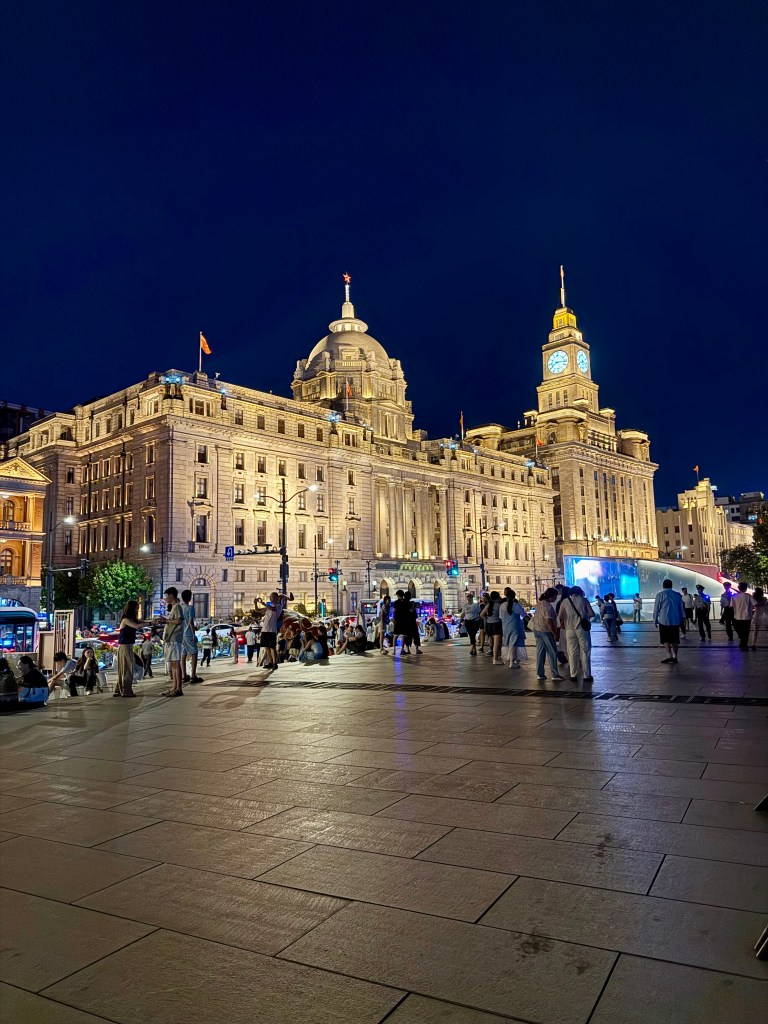
Shanghai, with its approximately 25 million residents plus tourists and those returning home for summer holidays, is a true human river. We blended into the crowd; the humid heat was palpable even in the evening. As we strolled along the Bund, we noticed that locals were watching us with surprise. Westerners are not numerous, and even fewer are those with a long beard like mine. People watched us with amusement, and some discreetly took photos. I was prepared for this curiosity, but experiencing it firsthand is always a unique pleasure.
The City’s Silent Sounds
The following morning, with a more tolerable temperature, we had the opportunity to explore the area surrounding the hotel. We returned to the waterfront and visited Nanjing Road, one of the most popular central avenues, lined with high-fashion boutiques and small Chinese shops.
What struck us most was the sound of the city—or rather, its quietude. The traffic is surprisingly silent due to the hundreds of electric cars and the thousands of electric scooters. The latter move like a swarm, predominantly operated by riders who work tirelessly to deliver food delivery orders to every corner of the city.
Culinary Experiences and Cost Analysis
For lunch, we were taken to a typical local restaurant, frequented only by residents and specializing for thirty years in steamed dumplings. With homemade dough and fillings ranging from shrimp and meat to crab, the culinary experience was complete with essential soups.
Contrary to some beliefs, Chinese cuisine is delicious and often healthy, characterized by simple, delicate ingredients. Locals love street food and stopping at any hour for a typical dish. However, it is important to remember that given China’s vast size, the cuisine varies greatly in terms of flavor and spice level.
Regarding prices, coming from Europe and especially Italy, they are incomparable. The cost for substantial and delightful dishes is truly nominal. A single dish can cost €1–€3, and the total bill never exceeded €40 for three people even in the most expensive restaurant we visited.
The costs for food, museum entry, and transportation (such as taxis, which are incredibly cheap and often feature high-end service in new-generation, futuristic electric cars) are astonishingly low for a Western tourist. However, we must consider that local salaries are not equivalent to ours, so what appears inexpensive to us has a different economic impact on them.
Tips for Your Stay
Beyond the Bund and the shopping streets, Shanghai offers countless attractions, including the Oriental Pearl Tower, the Yu Garden, the City God Temple, the charming French Concession, and the Jade Buddha Temple.
For accommodation: Given the more accessible costs compared to the West, I highly recommend the fantastic Waldorf Astoria at the Bund for its strategic location, services, comfort, and, of course, its historic Long Bar, where you can enjoy wonderful cocktails.
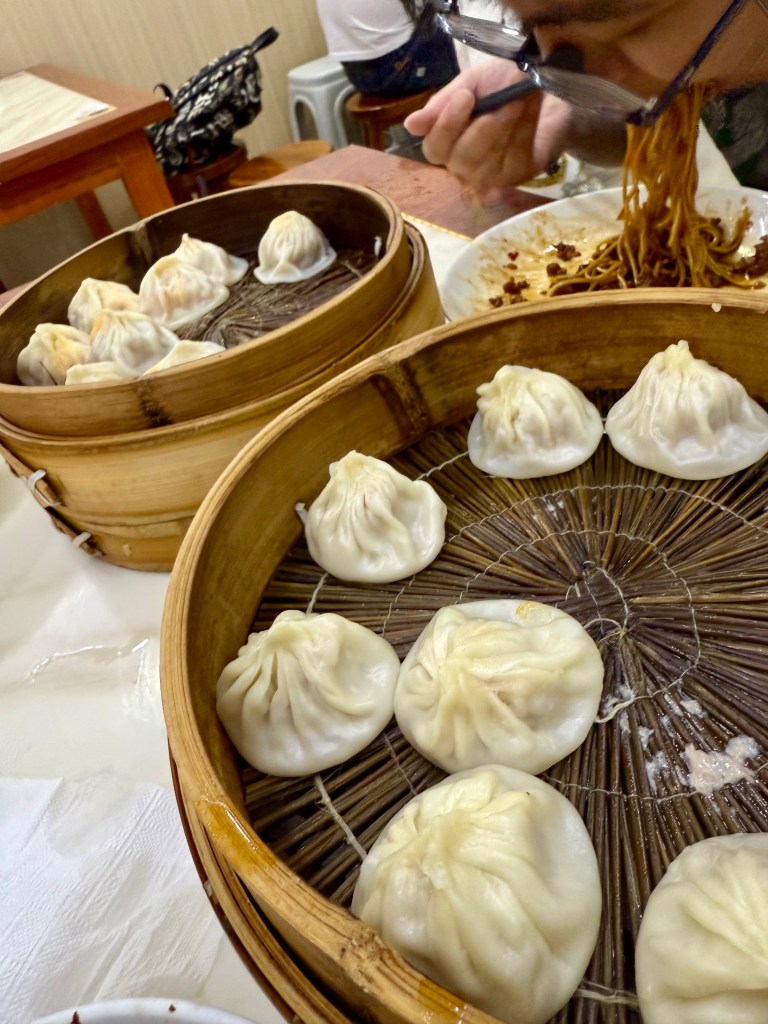
For dining: To find restaurants with excellent local food, look for places with a queue of locals waiting outside and a full house inside: this is the most reliable indicator of quality.
For a drink: If you have the chance, visit the famous and award-winning cocktail bar, Sober Company.
Salute!!

