
ITA/ENG
The era of the stiff cocktail bar, with endless menus, monumental explanations behind the counter, and heavy drinks, is officially over. Those managing major hotels, bar chains, or international beverage companies must realize that younger generations aren’t simply drinking “less” out of boredom: they are rewriting the rules of consumption from scratch. If we want our venues to keep hitting their targets over the next two years, we need to stop looking at old blueprints and observe what is actually happening on the global market.
1. The Lesson of Hard Seltzers and Hard Teas: Immediacy vs. Complexity
With Hard Seltzers and Hard Teas literally skyrocketing in global sales among Gen Z and Millennials, the bar industry cannot afford to turn a blind eye. This phenomenon sends us a crystal-clear message: tomorrow’s consumer seeks immediacy, clean bubbles, freshness, and zero complications. If the new generations prefer the easy-drinking nature of a ready-made alcoholic tea over a structured cocktail, it means we must review our rules of creation and sales. Fewer structural layers and more focus on long, lean, and thirst-quenching drinks (such as modern Highballs or light twists based on natural infusions), capable of offering that same accessibility but with a premium service.
2. The Clarified Paradox: The Triumph of “Natural” vs. Wild Clarification
There was a moment when laboratory-clarified cocktails seemed like the ultimate avant-garde. Let’s be clear: the technique itself is curious, interesting, and serves a purpose in giving a silky texture and visual clarity to a drink, but within a precise limit. Today, clarifying everything at all costs is achieving exactly the opposite effect, wearing out the consumer. In a world where the concept of natural, organic, and authentic rules purchasing decisions, over-the-top visual manipulation risks leading new consumers to see the drink as “fake” or chemical. A cocktail that is as clear as water but tastes like apple pie breeds distrust. Gen Z seeks visual honesty: they appreciate the technique if it makes sense, but they want to see the real color of the raw material, the texture of the fresh ingredient, and the imperfection of nature, rejecting lab-forced gimmicks.
3. Stop Calling Them “Mocktails”: It’s Time for Puretails
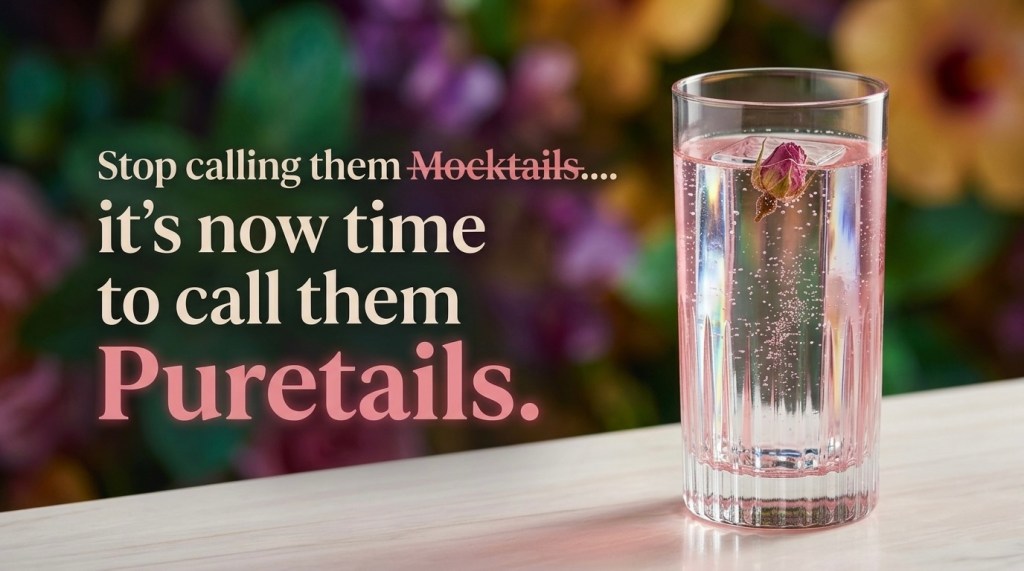
This rejection of the “fake” must also apply to the language we use on our menus. If we want to give real credit and dignity to a drink, even if it is alcohol-free, we must categorically stop calling it a Mocktail. Defining a commercial offering as a “mock cocktail” (from the English to mock, to mimic or make fun of) means devaluing it right from the start in the eyes of the customer. We are not selling a fallback option or a fake copy of something that lacks alcohol. The time has come to introduce a new category: Puretails (from the union of Pure and Cocktail). Whether it’s a structured drink made with dealcoholized spirits and alcohol-free botanical bitters, or seasonal herbal creations, we are not talking about a privation, but about the pure essence of mixology. A Puretail has its own technical identity, a complex sensory profile, its own dignity, and the same economic value (and price point) as a classic drink.
4. The Frontier of Juice Pairing: The Lesson from Geranium
The proof that the future of premium non-alcoholic drinking lies in nature and extreme balance—rather than in chemistry—came to me recently while attending a masterclass by Giulia Caffiero from Geranium in Copenhagen. Her approach to Juice Pairing is simply brilliant, ingenious, and fascinating. Giulia demonstrated the ability to create entirely non-alcoholic beverages starting from bases of seasonal fruits, vegetables, flowers, and herbs, working purely on millimeter-precise balances. I was fortunate enough to taste one of her creations, and it had been years since a beverage left me literally speechless. This is the true avant-garde consumers are looking for: organoleptic complexity,
freshness, and a total connection to the earth.
5. Instagrammable Aesthetics: The First Sip is Taken with the Eyes
The aesthetic component for social media is not a superficial detail, but an indisputable commercial prerequisite for capturing Millennials and Gen Z. A drink must be memorable to the eye before it even reaches the palate to drive digital sharing. This doesn’t mean giving in to baroque or plastic decorations (which would go against the idea of naturalness and the lessons of Juice Pairing), but working on an impactful minimalism: iconic glassware, intense natural colors, crystal-clear ice, and clean geometries that pop on a smartphone screen.
6. The “Zebra Striping” Strategy: How to Extend Bar Dwell Time
Beverage companies and hospitality managers must stop rigidly dividing customers into “drinkers” and “teetotalers.” Today, Zebra Striping dominates: the trend of consciously alternating, within the same evening, a premium alcoholic cocktail with a Puretail, and then perhaps returning to an alcoholic one. This fluid alternation allows customers to extend their stay at the venue without the negative effects of alcohol. For an operator, this translates directly into a higher average check: the same customer who previously stopped at just one drink now orders three.
The Paradigm Shift for Managers
Adapting to this scenario means giving Puretails options the exact same visual dignity, premium price point, and taste complexity as classic offerings, eliminating any barrier to entry on the menu. The new generations will occupy our bars in the coming years: understanding how they love to drink today, by drawing inspiration from models of natural and immediate excellence, is the only way to guarantee the economic sustainability of our businesses tomorrow.
Diego Ferrari

